
Ask three people in the same company what last month’s revenue was and you can get three answers. Sales counts signed deals. Finance counts invoices. Operations counts what actually shipped. Each number is right by its own rules.
Now AI agents are being asked that question. On October 28, Zoho relaunched Zoho Analytics as what it calls an agentic analytics platform and much of the release is about telling the AI what your words mean.
What Zoho shipped
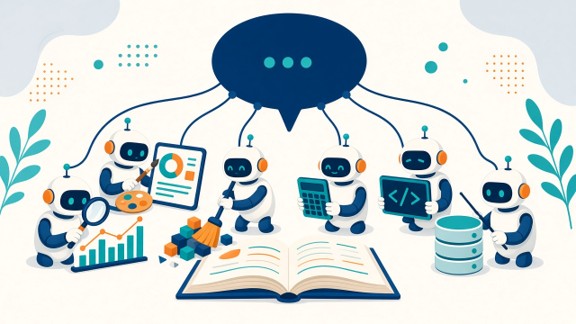
The new version turns its assistant, Ask Zia, into one conversation backed by six agents. One analyzes data and explains what happened and why. Others build charts and dashboards, clean and join messy data, write metric formulas, write SQL, and build machine learning models in Python.
The more interesting part is the context layer around them:
- An ontology that maps business entities such as customers, orders, products and vendors, and how they relate. For Zoho users, that includes linking a CRM contact to the same customer in Books and in Desk.
- A semantic layer that works like a glossary. Each metric gets a description, synonyms and instructions, so sales, revenue and bookings point to the right thing. Define it once and every agent and report uses it.
- Scoping, so an agent for one regional team only answers from that team’s data.
Zoho also added AI observability (which agents ran, who used them, what they accessed, and what they cost), plus an MCP server so outside AI assistants can use the same definitions. Pricing did not change. The new features are rolling out gradually in the cloud, with the ontology and semantic model arriving as previews over the next four to eight weeks, and on-premise customers get them in Q1 2027.
Why the definitions matter more than the model
Zoho says it plainly in its announcement: an agent that does not know what active customer means at your company will only guess. That is the real risk with AI analytics. A wrong answer delivered in confident, well-written sentences is harder to catch than a broken report.
Salesforce is making a similar bet. Nucleus Research, writing about Dreamforce 2026 on October 28, argued that agents are only as good as the context they run on, and that the governed data layer, not the model, is likely to become the reference architecture for agentic CRM.
Many businesses have the same metric calculated differently in the ERP, in a sales spreadsheet and in a finance report. People know which number to trust. An AI agent does not know that unless someone writes it down.
Write the glossary before you turn on the agent
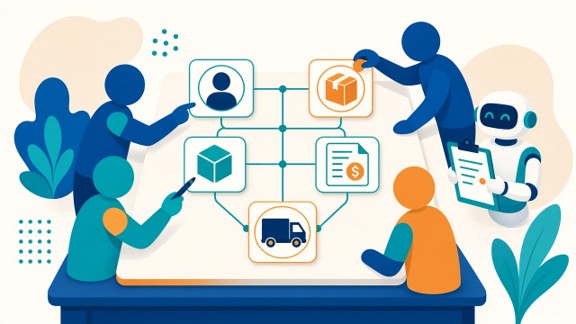
You do not need any specific tool to start. The work is mostly a conversation between the people who own the numbers.
Pick the ten or fifteen terms your team uses most: revenue, active customer, overdue invoice, gross margin, stock on hand. For each one, write a single sentence that says what it includes, what it excludes, and which system is the source. Where two departments disagree, decide which definition the company will use, or give each version its own clear name.
Then decide what each team should be able to see. Zoho’s scoping and role-based policies only help if you already know who should see which data.
Practical takeaways
- List the metrics people argue about most and settle each definition in one sentence.
- Name the source system for every key number, so the AI is not choosing between two.
- Map how a customer appears across your CRM, accounting and support tools.
- Decide who should see which data before any agent gets access.
- Test the agent with questions where you already know the right answer.
AI can now build the dashboard, write the query and explain the trend. It still cannot decide what your business means by its own words. That part is still your job.
Which number in your business would get three different answers from three different departments?