
Most businesses have some buying that happens outside the normal process. Someone orders from a supplier that is not on the approved list, or pays a price that is higher than what the contract says. Procurement teams call this maverick spend and contract leakage, and it is usually found late, if it is found at all.
Yesterday at Oracle AI World in Las Vegas, Oracle announced an AI agent built to look for exactly this. It is a good example of where AI can help in procurement, and also of what it needs from you before it can help.
What Oracle announced

Oracle released 25 new agentic applications across its Fusion Cloud ERP, HR, supply chain and customer experience products. One of them, called Procurement Spend, sits in the supply chain suite.
According to Oracle, it analyzes spend, supplier agreement and purchasing data. It looks for maverick spend and contract leakage, explains the root causes, estimates the possible savings and recommends corrective actions. Those actions go to the procurement team for review and approval.
That last part matters. The agent does the searching and the explaining. People still decide what to do about a supplier or a contract.
The agent can only compare what is connected

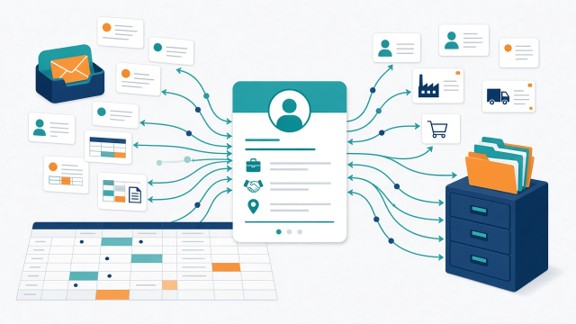
To find contract leakage, software has to compare two things: what you agreed to pay and what you actually paid. That only works if the contract terms, the supplier record and the purchase all exist in the system and point to each other.
Microsoft is making a similar point from a different direction. Its Supplier Engagement feature for Dynamics 365 Supply Chain Management, in public preview since August, keeps one shared supplier profile with contacts, addresses, certifications and capabilities. Suppliers can register, update their own details, answer requests for quotation, confirm purchase orders and submit invoices through a portal. Microsoft describes this as the foundation agents need, because they require context such as the supplier relationship, the stage of the process and the approval rules, not just raw data.
Off-contract buying is often a process problem

An agent may tell you that a team keeps buying from an unapproved supplier. The useful question is why.
Sometimes the approved supplier is slow. Sometimes the purchase order process takes longer than the job allows. Sometimes nobody told the team which contract applies. AI can surface the pattern, but fixing it usually means changing the process, not adding more alerts.
This is also why it is worth starting with your own data before buying a new tool. If most of your spending already runs through purchase orders linked to contracts, an AI check will find real issues. If it does not, the first finding will simply be that the data is incomplete.
Practical steps before adding AI to procurement
You do not need Oracle or Microsoft to get ready. A few steps help with any system:
· Put the key terms of your main supplier contracts (prices, discounts, payment terms) into your ERP or purchasing system, not only in PDFs.
· Merge duplicate supplier records and decide who is allowed to create new ones.
· Agree on which purchases need a purchase order, and make that path easy enough that people actually use it.
· Categorize your spending consistently, so patterns can be compared over time.
· Ask any vendor what data their agent reads, what it can change on its own, and what pricing looks like. Microsoft, for example, says licensing for Supplier Engagement is still under review.
AI that reviews every purchase against every contract is genuinely useful, especially for small teams that could never do that by hand. But it works on the records you have, not the ones you meant to keep.
If an agent checked your last three months of purchases today, how much of that spending could it actually match to a contract?
Sources
· Oracle: Oracle Introduces Claw-Powered Fusion Agentic Applications for Supply Chain (Oct 26, 2026)
· Oracle: Oracle Advances Outcome-Driven AI Across Fusion Applications (Oct 26, 2026)
Microsoft Learn: Supplier Engagement deployment overview, prerequisites, and licensing (preview)