
Anyone who has been through an ERP implementation knows the timeline usually slips. Requirements take longer to gather than planned, data needs more cleaning than expected, and testing gets squeezed at the end.
Today at SuiteWorld in Las Vegas, Oracle NetSuite announced SuiteExpress, an AI toolset and method meant to shorten that process. NetSuite says it can bring implementation time down to weeks, or even days. That is a big claim, and it is worth looking at what the AI actually does and what it still depends on.
What NetSuite announced
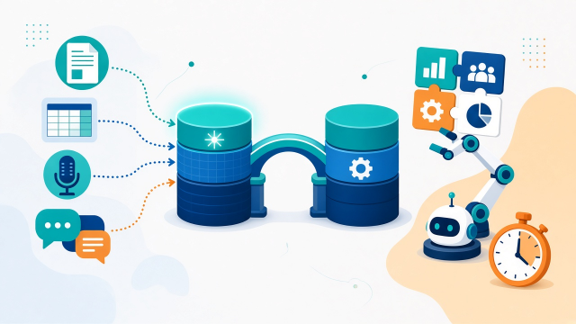
SuiteExpress is built around two connected knowledge bases. The first is about your business. It takes in meeting notes, documents, spreadsheets, recordings and data from your other systems, and uses them to record requirements, business processes, configuration decisions and test results.
The second is NetSuite’s own knowledge: product, implementation and industry experience that the company says comes from serving more than 44,000 customers.
With both, the AI recommends next steps and does implementation work under consultant oversight. NetSuite lists capturing requirements and finding gaps, preparing and validating data from old systems, mapping needs to configuration patterns, creating and running workflow tests, and guided training based on your setup. Consultants still guide key decisions and handle exceptions.
For now it is available only to software-industry customers in the United States and Canada. CIO reports wider availability is planned for 2027. NetSuite has not published pricing or benchmarks behind the weeks-or-days claim.
Speed helps, but decisions are the slow part
A lot of implementation time does go into repetitive work: writing up requirements, mapping fields, preparing test scripts. If AI does that well, that is real time and money saved.
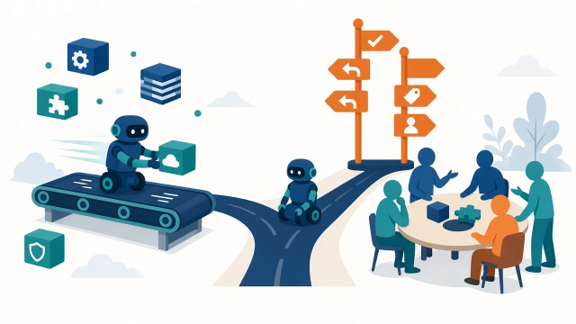
But in my experience, the delays in ERP projects rarely come from typing. They come from decisions nobody has made yet: which approval rules apply, how returns are handled, what counts as the real price list, who owns customer data.
AI can organize those questions faster. It cannot answer them for you. If the business has not agreed on how a process should work, a faster implementation just gets you to the same unresolved question sooner, or builds the current workaround into the new system.
Your meeting notes become the system’s memory

The most interesting part of SuiteExpress is not the speed. It is the idea that requirements and decisions are captured in one place and kept after go-live. NetSuite says that context can be reused later, for example when you add a subsidiary or enter a new market, without repeating discovery from scratch.
That is useful. Most businesses lose this knowledge when the person who knew why a workflow was built a certain way leaves.
But it also means the quality of your inputs matters more. Meeting notes record what people said, not always what is correct. Old spreadsheets often hold exceptions nobody explained. If those go into the knowledge base unchecked, the AI will treat them as requirements.
You would also be handing over recordings and data about how your business runs. It is fair to ask how that is stored and who can see it.
What to do before any AI-assisted implementation
Whether you are looking at NetSuite or another ERP, AI-assisted implementation is likely to become common. A few steps help either way:
- Settle the key process decisions before the project starts, and write them down in plain words.
- Review what goes into the knowledge base. Remove outdated notes and explain the exceptions in your spreadsheets.
- Clean your master data first: customers, items, suppliers and open balances.
- Have the people who do the work review the AI’s tests, not only the consultants.
- Ask the vendor how your business information is stored, who can access it, and what the pricing looks like.
Faster setup is good news, especially for smaller companies that could not afford a long project. Just remember that the software can only be configured around decisions you have actually made.
If an AI read every meeting note and spreadsheet in your company today, would it understand how your business really works?
Sources
- PR Newswire via ADVFN: NetSuite Introduces SuiteExpress to Accelerate ERP Implementation and Continuous Improvement with AI (Oct 26, 2026)
- CIO: NetSuite launches SuiteExpress to expedite implementation and optimization of ERP (Oct 26, 2026)
- Small Business Trends: NetSuite Unveils AI Tool to Cut ERP Setup From Months to Days (Oct 26, 2026)