
On October 19, BILL, the US finance platform used by nearly 500,000 businesses, announced a new set of AI features.
The part I find most useful is the least exciting one. Before a bill gets paid, the AI looks at it and asks a simple question: does this look like what this vendor usually charges you?
That sounds small. But it is AI aimed at an everyday business problem, not a hypothetical one.
What BILL actually launched

These are the main pieces, all announced on October 19:
- Risk intelligence: it checks invoices during approval, before payment is scheduled, and flags amounts that differ from the usual pattern for your business and that vendor.
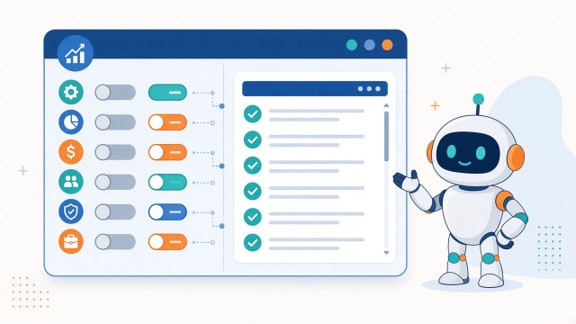
- An AI control hub: one place to see what BILL’s AI has done for you, switch AI tools on or off, and decide how much it handles.
- Chat with BILL (beta): plain-language questions, like which vendors need paying or where an invoice stands.
- An MCP connection: MCP is an open standard for linking AI assistants to business systems, so users can ask an assistant about their BILL finance data.
- AI-assisted onboarding and an inbox that labels incoming invoices and W-9 tax forms.
BILL says they are rolling out to customers now.
Why a simple check catches real money

BILL says that in its 2026 fiscal year, about $1.5 billion in customer payments were held because of simple mistakes or unusual payments. A typical example: a vendor sends an invoice for the wrong amount.
The company also says that since August, the feature has detected on average $138,000 of mistakes or unusual payments per customer. These are BILL’s own figures, and unusual does not always mean wrong. They still point at a real gap.
One customer quoted by BILL, an accounts payable manager, described a legal bill 33 times higher than average that the system flagged.
Approving bills is repetitive work. When the same vendors send similar invoices every month, people start approving by habit. A check against the vendor’s own history gives the approver a reason to stop and look. The AI does not replace the approver. It helps them focus on the one bill that needs attention.
In ERP projects, I have often seen this kind of check live in one experienced person’s head instead of in the system.
Control comes before autonomy
BILL cites research that 86% of SMB leaders use AI tools in their financial operations, but only 19% trust AI completely, mostly because of data quality and security.
I think that caution is reasonable. Finance is where a wrong action costs real money. Before you let AI do more with payments, you need to see what it already did and be able to turn it off.
That is the job of the hub. BILL says 175,000 businesses have already used at least one of its AI features, and they now get an auditable record of the AI’s actions.
The same thinking applies to the MCP connection. Asking an AI assistant about your bills is convenient. Before turning it on, know which assistant can see your financial data and who on the team can use it.
What you can take from this
You do not need BILL to use the main idea. If you run your own ERP, accounting system or custom software, these questions are worth asking:
- Is each invoice compared to that vendor’s past bills before approval, or only noticed after payment?
- Does the warning appear at the approval step, where someone can still act on it?
- If AI takes actions in your finance tools, is there a log you can read and a switch to turn it off?
- Are you starting with AI that helps a person decide, before AI that decides on its own?
In many systems, a first version of this check could be a simple rule that compares an amount to the vendor’s average. AI becomes more useful when the patterns get harder to describe with rules.
How do bills get checked in your business today: by a system, or by someone who remembers what last month looked like?
Sources
- BILL press release: BILL Launches New Suite of AI Capabilities to Put Finance Teams in Control of AI and Protect Every Dollar (Oct 19, 2026)
- BILL blog: New BILL features give finance teams confidence and control of AI (Oct 19, 2026)
- FinanceInsyte: BILL Deploys Agentic AI to Mitigate Payment Errors (Oct 20, 2026)