
Most people think building a custom web app is mainly about design — making something that looks polished and professional. In reality, the design is probably the last thing you should think about. What comes before it is far more important, and skipping those steps is exactly why so many custom software projects fail to deliver real value.
Here’s what the process actually looks like when it’s done right.
It Starts With Understanding Your Business — Not Your Screen
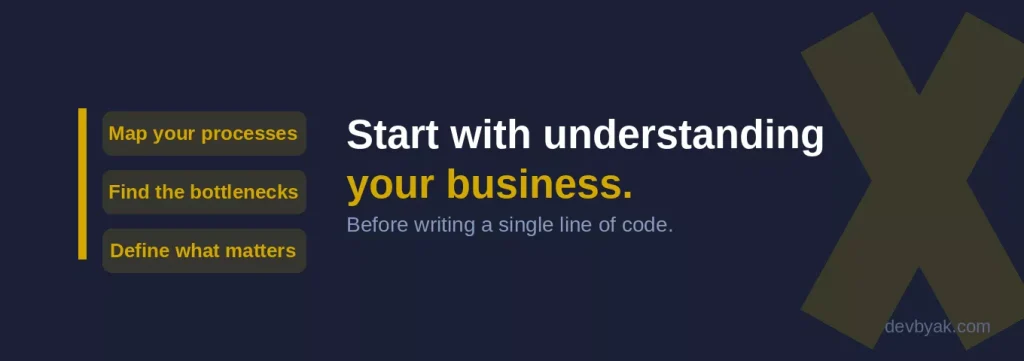
Before writing a single line of code or sketching a single screen, you need a deep understanding of how your business actually operates day-to-day. That means mapping out your current processes: How does work move from one person or department to the next? Where do things slow down or break? What tasks eat up the most time? What decisions do you make repeatedly — and what information do you need to make them well?
This discovery phase isn’t optional. It’s the entire foundation. An app built without it might look great but solve the wrong problems entirely.
Then You Build the Foundation — Before You Build the Features
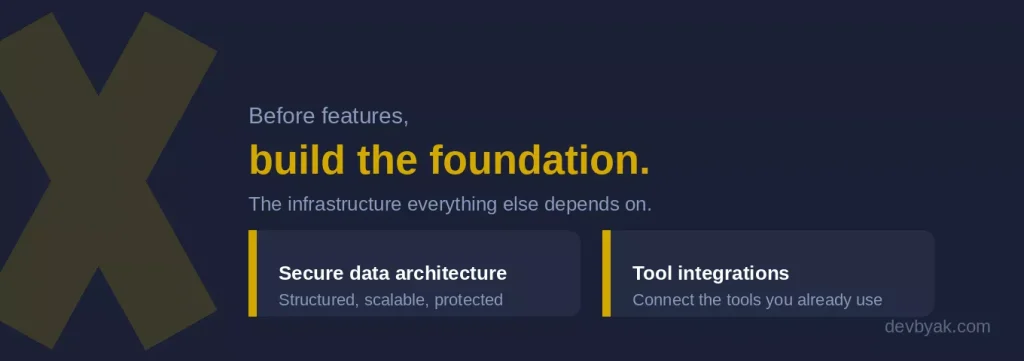
Once you understand the business, you build the infrastructure that everything else will depend on:
1. A secure, structured data system
Your app needs to store, organize, and protect the information that runs your business — whether that’s customer records, orders, inventory, finances, or employee data. A well-designed data architecture means your app won’t just work today; it’ll scale reliably as your business grows.
2. Integrations with the tools you already use
Almost no business runs on a single platform. Your web app needs to connect smoothly with the tools already in your workflow — whether that’s your CRM, accounting software, communication tools, or third-party APIs. Getting these integrations right means your team doesn’t have to switch between systems or re-enter data manually.
Now You Design the Screens — With Purpose
Only after the foundation is solid does the interface design become the focus. And even then, the goal isn’t aesthetics for its own sake. The goal is clarity and speed for the people using it daily.
Good UI design for a business app means: reducing the number of steps to complete a task, surfacing the right information at the right moment, and making it easy for your team to do their jobs without needing a manual. Every screen should answer the question: does this make my team faster and less frustrated?
The Real Payoff: Visibility Into Your Business

The feature most business owners underestimate before they have it — and can’t imagine living without afterward — is reporting and dashboards.
When your app is built correctly, it becomes a live window into your operations. You can see at a glance what’s performing, what’s falling behind, where bottlenecks are forming, and what decisions need your attention. Charts, metrics, and custom reports transform raw data into something you can actually act on.
This is where custom software creates a real competitive advantage. Off-the-shelf tools give you generic reports. A custom app gives you your numbers, in your format, tracking what actually matters to your business.
Why This Requires Real Expertise
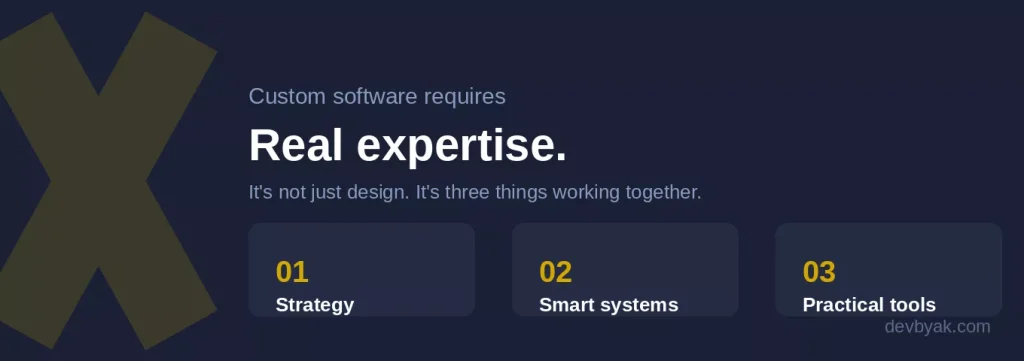
Building something like this isn’t a design project — it’s a strategy project that requires design, engineering, and systems thinking working together. The people building it need to understand your business logic, design scalable data systems, write reliable integrations, build a usable interface, and think ahead to the reports and decisions you’ll need to make six months from now.
That’s a different skillset from building a marketing website. And it’s why rushing or cutting corners in any of these layers usually means building something you’ll need to rebuild.
Where to Start
If you’re considering a custom web app, the single most valuable first step is this: map your current processes before you talk to anyone about building anything.
Write down how work actually flows through your business today. Note where things break, where things are slow, and what you wish you could see more clearly. That document will be the most useful thing you bring to any developer or agency conversation — and it’ll save you significant time, money, and frustration down the road.
The best custom software isn’t built from a list of features. It’s built from a clear understanding of the problem it needs to solve.